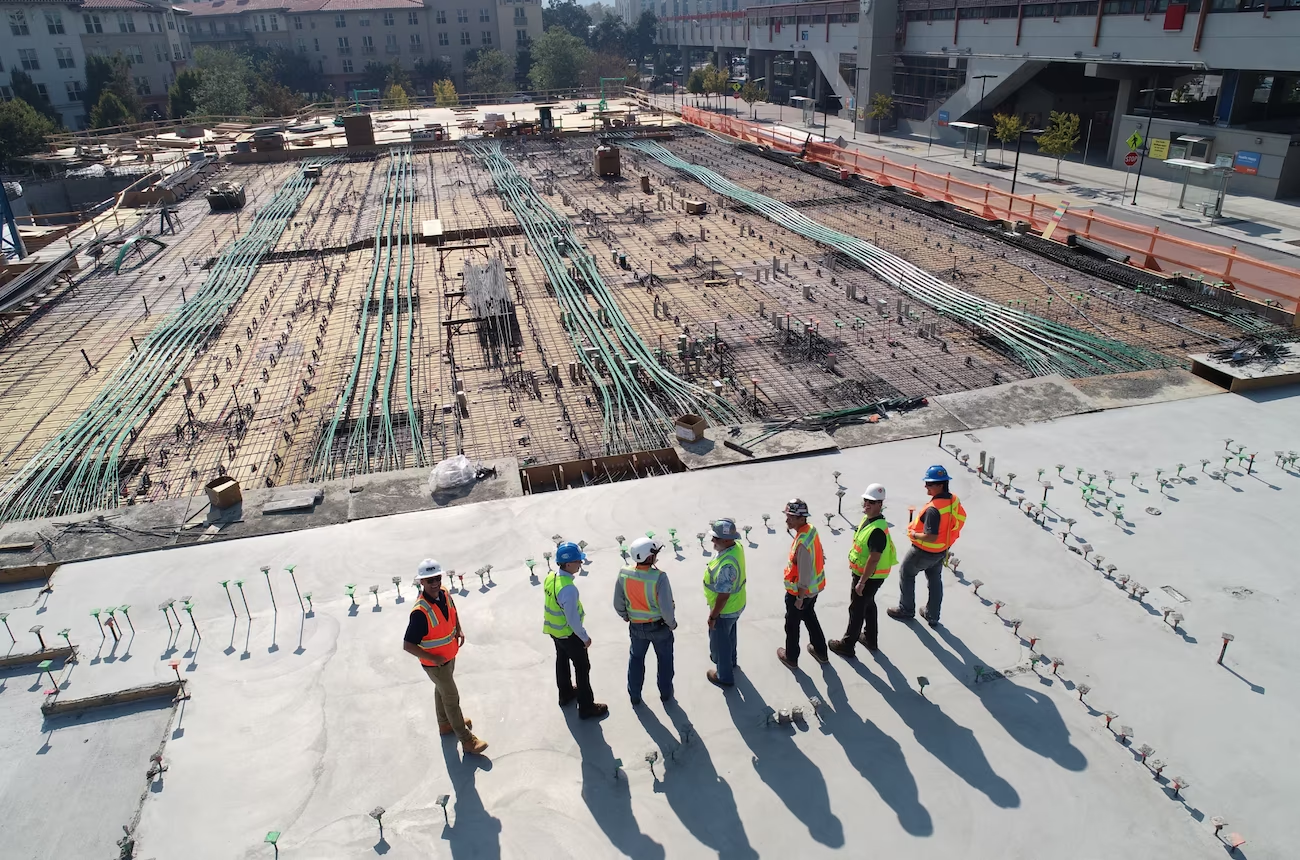
Our Engagement Model
Whether operating in Quebec, Ontario, Florida, or Texas, we execute transformation across the Residential, Industrial, and Heavy Civil sectors without destabilizing active projects.

Construction Enterprise Transformation begins with a structural assessment. We identify misalignment in your reporting hierarchy and cost structures before enabling any digital systems.
Our diagnostic identifies structural gaps across five enterprise layers to ensure systems are built on a foundation that works.
Define decision rights, reporting hierarchy, and regional segmentation to ensure clear authority.
Identify where current governance fails under pressure and establish enforceable cadence.
Evaluate the mandate and enforcement structure needed to make standards real across projects.
Deploy ERP and Microsoft ecosystem tools only after the enterprise architecture is stabilized.
Map capital exposure and document control risks to protect margins during transformation.
Define financial authorization levels and spend-velocity gates to prevent capital leakage.
Automate alerts for critical path delays before they impact project completion deadlines.
Set enforceable boundaries for scope changes to protect original margin targets.
Establish clear reporting paths for resolving technical and financial blockers instantly.
Standardize performance metrics across all sectors for unified enterprise reporting.
Install rigid document control governance to ensure audit readiness and compliance.
Reflects standardized WBS and cost architecture (not just custom views). Aligned to enterprise KPIs.
Reduces approval latency by enforcing structured decision gates and governance-led workflows.
Codifies repeatable field-to-office workflows to eliminate disconnected prototypes and fragmented data.
Protects contractual documentation, audit trails, and retention governance (not for file dumping).
Aligns meeting cadence and execution channels with the established governance rhythm.
Integration only follows stabilized data definitions, becoming a control system, not a source of conflict.
.png)
Margin volatility declines across the portfolio as capital exposure is managed.
.png)
Reporting consistency increases because cost and delivery definitions stop shifting.
.png)
Change-order cycle time shortens because governance thresholds and approval gates are clear.
.png)
Decision latency reduces because leadership trusts the numbers across the organization.
.png)
Audit exposure declines through improved documentation governance and compliance confidence.
.png)
Adoption becomes measurable and sustainable because tools reinforce how the enterprise operates.
Transformation is not an IT project; it is an enterprise architecture redesign executed in phases. We ensure that structural discipline and enforceable governance are installed before any technology activation to guarantee long-term durability.
Structure precedes technology
Enforcement precedes automation
Cadence precedes dashboards
Accountability precedes reporting
Leadership discipline precedes durability
.avif)