
Anonymous case study • Civil and municipal infrastructure
The contractor needed a new ERP decision, but the real work began before the software shortlist.
The client was a mid-sized regional contractor delivering civil and municipal infrastructure work. Finance, project management, equipment, procurement and field operations were not connected well enough to make a platform decision safely.
Discuss ERP readinessView all success stories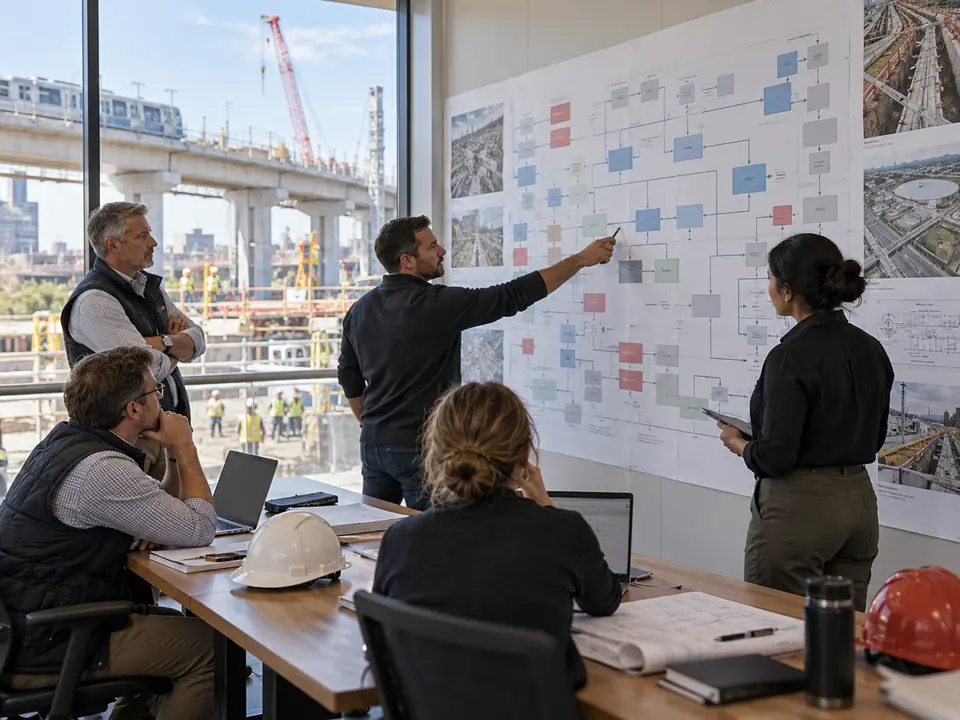 INFRASTRUCTURE CONTRACTOR
Engagement at a glance
- Client profile: mid-sized civil and municipal infrastructure contractor
- Starting issue: gaps between finance, projects, equipment, procurement and field work
- Decision required: prepare for and select an ERP direction
- Boris & Associates Inc. work: readiness assessment, business requirements, data and integration design, selection and rollout strategy
Why was this more than a software-selection problem?
The company could compare product features, but it had not yet agreed on how the full work should move or which system should own each record. Selecting first would have moved unresolved process and data problems into a new platform.
Finance and projects did not share one flow
Budgets, commitments, cost, billing and forecasts moved through different tools and handoffs.
Equipment and procurement crossed several owners
Usage, maintenance, purchasing, receiving and project charging required connected decisions.
Field information arrived through separate paths
The company needed to decide what should be captured, where it should go and who would use it.
What did the readiness work examine?
We followed the transactions and decisions that create project and company information. The review identified the future process, the information each step needed, the system that should own it and the interfaces required between platforms.
Business processes
Estimating handoff, project setup, procurement, cost, billing, equipment, change and closeout.
Data structures
Projects, cost codes, vendors, commitments, equipment, employees and other shared identifiers.
System roles and integrations
What belonged in the ERP, project tools, field solutions and reporting environment.
What did Boris & Associates Inc. deliver?
The work created a selection and implementation foundation based on the contractor’s operations. Vendors could be evaluated against connected construction scenarios instead of a list of isolated features.
ERP readiness assessment
Identified business, data, technology and adoption gaps that could affect the program.
Construction requirements
Defined end-to-end scenarios and the controls the future solution needed to support.
Data and integration plan
Mapped master records, ownership, interfaces and reporting dependencies.
Selection criteria
Turned operating needs into demonstrations, scoring and decision questions.
Phased rollout strategy
Sequenced preparation, configuration, migration, testing, training and stabilization.
How were equipment and field operations kept in scope?
The ERP decision was not limited to accounting. Equipment, procurement and field information affect project cost and forecast, so their processes and system boundaries were included even when a specialized tool would continue to perform part of the work.
Equipment records and cost
Clarified asset information, work, usage and project charging.
Procure-to-pay
Connected request, approval, commitment, receipt, invoice and payment.
Field-to-finance
Defined which field facts must reach project and financial controls and at what point.
What did leadership receive?
Leadership received a fact-based way to choose and implement the ERP. The company had clearer requirements, data ownership, integration needs, evaluation criteria and a phased plan before committing the business to configuration.
A safer buying decision
Vendors could be compared against the contractor’s real operating scenarios.
Visible preparation work
Process, data and ownership gaps were identified before they became implementation delays.
A connected system plan
The ERP was given a clear role beside project, field, equipment and reporting tools.
A practical rollout path
The company could plan change by dependency and operating cycle.
What can another infrastructure contractor learn?
ERP readiness is not a long requirements exercise. It is the work of deciding how the company will operate, what information must be trusted and where each system belongs. That makes selection faster to defend and implementation less dependent on assumptions.
Continue with the related work
Use these links to move from the client situation to the service and audience pages that explain the work in more detail.
Microsoft for Construction
Construction Transformation System
Questions construction leaders ask
These are the questions we hear most often from construction leaders facing the same operating challenge.
Should a contractor select the ERP before redesigning processes?
No. The most important end-to-end processes and controls should be clear enough to evaluate the product and guide configuration.
Must one ERP replace every specialized construction tool?
No. The company should define system roles. A specialized project, field or equipment solution can remain when its information and ownership are connected.
What data should be prepared first?
Start with shared records and identifiers such as projects, cost structures, vendors, equipment, employees, commitments and change records.
Are you comparing ERP products before the company has agreed on the work?
We can help you define the processes, data, system roles and implementation conditions needed to make a defensible decision.
Discuss ERP readiness